

Many women in their 40s may feel like their health changes in ways they can’t quite control. For instance, daily activities feel more demanding, and a general fatigue often sets in. This isn’t just a feeling. It’s a predictable part of aging, one strongly linked to a decrease in muscle mass.
While this transition, especially when combined with the hormonal shifts of menopause, can feel disheartening, the resulting decline doesn’t have to control your future since there are practical ways to prevent muscle loss after menopause, and consistent strength training is the most important part of that solution.
The midlife strength advantage: Why it's about longevity, not just looks
Women’s bodies undergo sudden biological shifts, especially after menopause. It is a natural process characterized by reduced muscle mass, lower bone density, and a noticeable slowing of metabolism.
For females over 40, building muscle through strength training programs can help counter these shifts. For instance, Harvard Health states that it plays a role in slowing bone loss and can even build new bone mass, which is tremendously useful in offsetting age-related declines in bone mass.
That goes to show that beyond aesthetics, this type of fitness regimen supports your overall health, maintains your independence, and preserves your long-term vitality.
The unique challenges and importance of building muscle in midlife
By the time a woman hits 40, she is often already experiencing age-related muscle loss, a process known medically as sarcopenia. Research shows muscle mass can decrease by 3-8% per decade after age 30, and this decline unfortunately accelerates after age 60.
On top of this, most of our biological processes, including muscle building and recovery, simply slow down as we get older. This combination of factors makes it more challenging to build and maintain new muscle.
The connection between menopause and muscle decline
So, why is it hard for women over 40 to build muscle?
One of the primary drivers is hormonal. The significant drop in estrogen and progesterone notably marks the shifts during perimenopause and menopause.
Estrogen is not just a reproductive hormone. It plays a large part in promoting muscle regeneration and stimulating its growth and repair. When estrogen levels fall, our bodies become less efficient at this process.
Other issues can also arise from these hormonal fluctuations. Many women experience increased low-grade inflammation, which can lead to their bodies storing more fat, particularly around the midsection. This new metabolic state can further compromise muscle health, making the journey to gaining strength after menopause feel like an uphill battle.
The critical role of muscle mass for women’s health
We often think of muscle as something we use just for physical activity, but it is a vital part of our overall health. It is fundamental for body movement, balance, and maintaining good posture.
Perhaps more importantly, muscle is now understood to be an active metabolic organ. Some research even indicates that this tissue is a better predictor of long-term health than your Body Mass Index (BMI).
Because it is so central to your health, a decline in muscle mass is not a trivial concern. This condition is associated with significant health problems, including slower post-surgical healing and reduced physical function. It has been identified as an underlying factor for almost 20% of heart failure patients.
Women are at a higher risk of functional decline simply because they generally have lower baseline levels of strength compared to men. A study of Singaporeans aged 65 and older highlighted this disparity. Its findings stated that nearly 25% of the women had these low strength levels, compared to just 15.5% of the men.
This is why it’s vital to be mindful of the early signs. Pay attention to a persistent decrease in energy, a feeling of general fatigue, or difficulty with everyday activities.
Key reasons to make strength training a priority after 40
Strength training is important because it serves as our primary defense against this natural age-related decline, and the reasons to make it a priority are clear.
1. Combating muscle loss
Strength training directly helps women preserve and even rebuild muscle mass and bone density. This helps fight back against sarcopenia and its associated risks, such as weakness, frailty, and debilitating falls.
2. Boosting metabolism and supporting a healthy weight
Compared to fat, muscle is a more metabolically demanding tissue. It requires more calories to sustain, even at rest.
As such, building and maintaining muscle helps combat the natural slowdown in metabolism that often accompanies midlife, making it indispensable for managing body weight in a healthy, sustainable way.
3. Strengthening bones and preventing osteoporosis
Bone health is a significant reason why women in their 40s should take up weight training. Once menopause occurs, bone loss speeds up dramatically, which increases the risk of osteoporosis.
Strength training helps by putting productive stress on your bones. This exercise stimulates bone-building cells and improves your overall bone density.
4. Reducing injury risk and supporting joint health
Strong muscles built through exercise, like strength training, protect your joints by stabilizing your knees, bracing your hips, and protecting your spine. This leads to improved posture and enhanced balance, both of which help reduce the risk of falls and common injuries.
5. Enhancing longevity, mood, and confidence
Strength training offers more than just physical advantages. Studies link it to better cognitive health, an improved mood, and a longer, healthier lifespan.
Physical activity releases endorphins, which can improve feelings of pleasure and relaxation. It is also a powerful outlet for managing the stresses of midlife. Finally, there is a profound mental and emotional boost that comes from feeling physically strong and capable in your own body.
Practical tips for beginning your strength training journey
Building muscle after menopause can be achieved by creating a sustainable fitness routine.
1. Prioritize consistency over intensity
When you are just beginning, consistency is far more important than intensity. Your goal is not to push yourself to the limit in every session. Instead, start with a manageable schedule you can stick to, such as two sessions per week. This builds momentum, helping you create a lasting habit without burnout or excessive soreness.
2. Focus on foundational movements
Rather than focusing on isolated muscle groups, like a bicep curl, think in terms of foundational movement patterns. These are the movements that translate directly to real life:
- Squat (like sitting in a chair)
- Hinge (like picking up a heavy bag)
- Push (like pushing a heavy door)
- Pull (like pulling a suitcase)
Full-body exercises that work multiple major muscles at once are efficient and build the foundation of your strength and mobility.
3. Master your form first
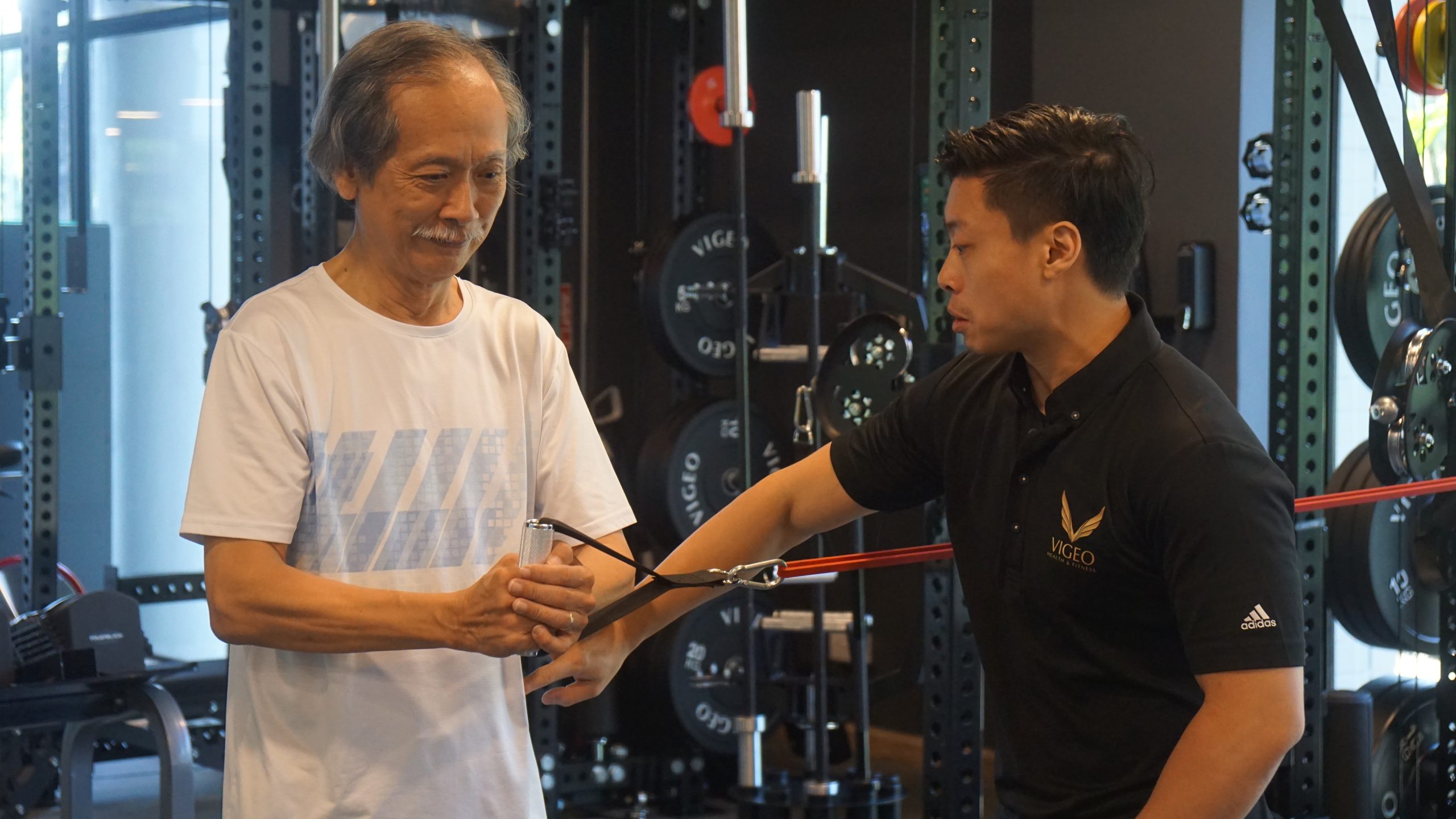
Focusing on proper technique is fundamental to preventing injury. We recommend starting with just your bodyweight to learn the movements. You can gradually introduce resistance bands or light weights after your form is consistent.
4. Work with a professional
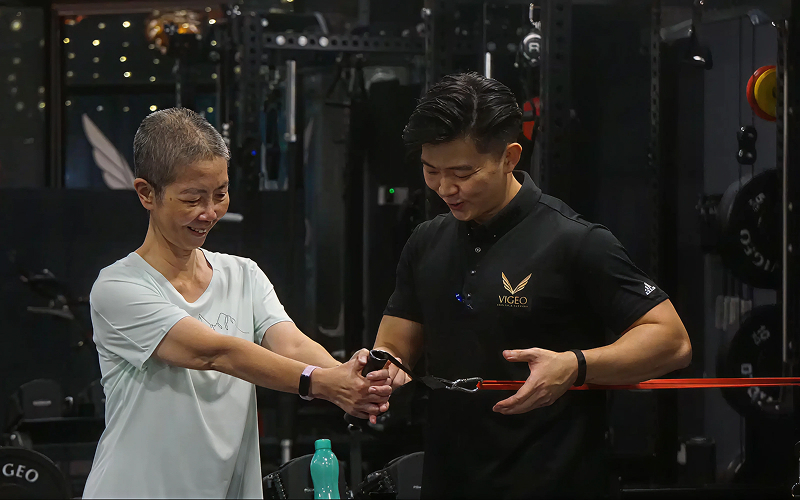
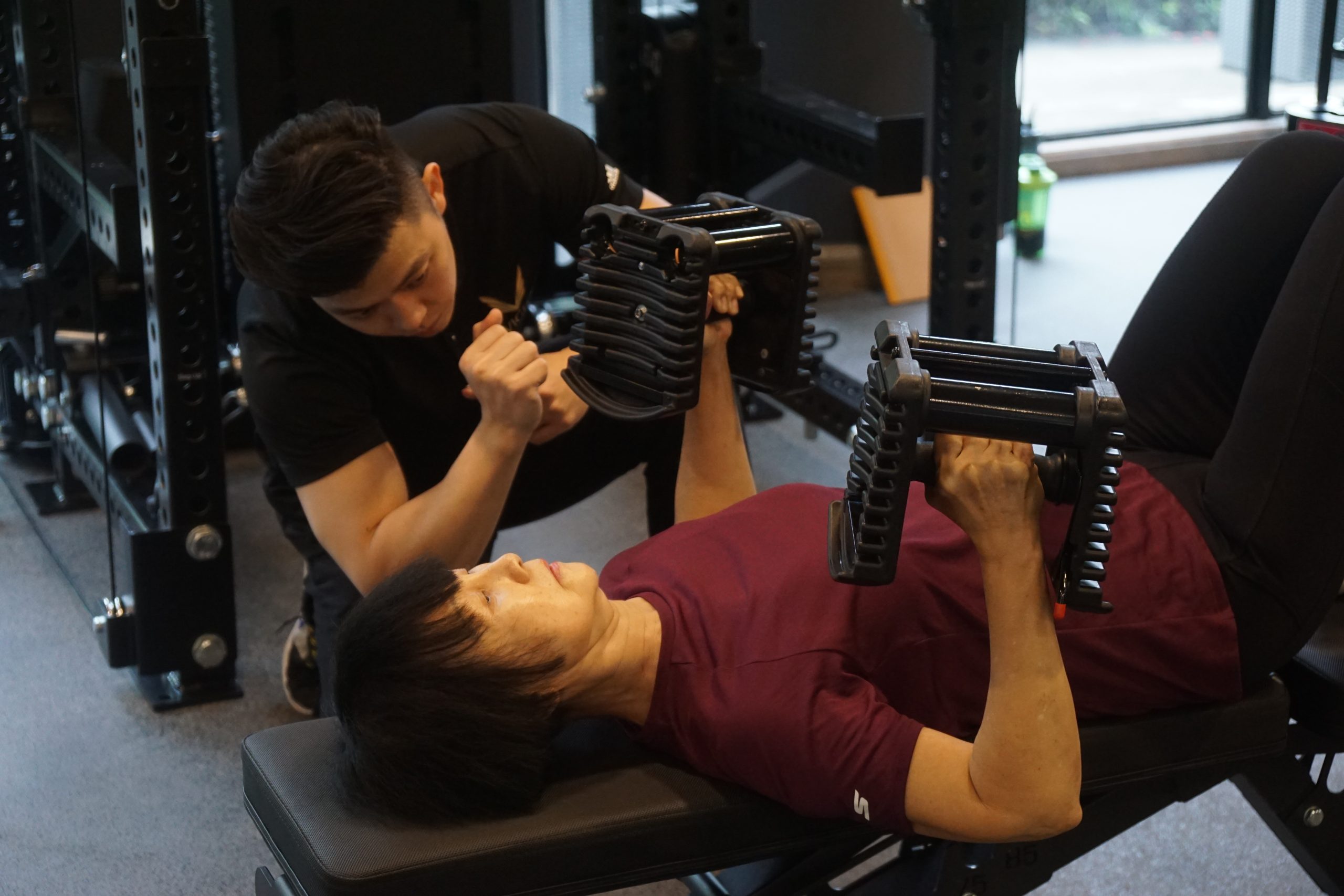
Navigating a new fitness routine, especially if you have past injuries or concerns, can be intimidating. Working with a qualified trainer can make all the difference. A personal trainer for female clients in midlife understands the unique challenges, ensures your technique is correct, and gives you the confidence and guidance to progress safely.
5. Respect your body’s need for recovery
This part of the process is just as necessary as the workout itself. Your muscles don’t grow during the workout. In fact, they develop and repair afterwards, during rest.
As we age, recovery becomes even more of a priority. You must build in rest days and prioritize 7-9 hours of high-quality sleep each night to allow your body to adapt and get stronger.
Build your strongest future with Vigeo
The changes that come with turning 40, 50, and 60 are real. But they do not have to define your future. Building muscle after menopause or the age of 40 is not only possible, but also the most empowering action you can take for your health.
Increasing your muscle mass is about building a capable, resilient body that enables you to lead a fuller life. This means having the stamina to pursue your passions and the vitality to care for yourself and your loved ones.
Vigeo’s mission is to redefine fitness for men and women in midlife. Our team of experienced private fitness trainers in Singapore specializes in creating sustainable personal training and nutrition programs. We’re here to help you build lasting strength for the future. Reach out to us today to learn how we can help you flourish.