

Key Takeaways
Supporting bone health and reducing osteoporosis risk involves more than calcium and vitamin D. Regular weight-bearing and resistance exercise can also help maintain bone strength as we age.
Weight-bearing activities place mechanical load through the skeleton, providing a bone-strengthening stimulus that activities such as swimming and cycling do not provide to the same extent.
Resistance training places mechanical load on the skeleton while also building the muscle strength needed for balance and everyday function.
Exercise can help maintain bone density and may improve it, while also supporting strength, balance, and physical function. Results vary between individuals.
For someone with osteoporosis, exercise planning should reflect their bone health, medical guidance, and current ability, not the diagnosis alone.
Building Stronger Bones Through Smarter Movement
Maintaining strong bones requires more than calcium and vitamin D.
Regular physical activity, including appropriate weight-bearing and resistance exercise, can support bone health and physical function alongside adequate nutrition and medical care where needed.
Bone is living tissue that responds to physical stress and adapts to load, so prolonged underuse can gradually reduce its strength.
For seniors, we encourage a combination of weight-bearing activity, resistance training, balance work, and mobility work.
Each supports a different aspect of bone and movement health, and together they can help maintain bone strength, muscle function, balance, mobility, and everyday physical capacity.
Why Exercise Matters for Preserving Bone Density
Osteoporosis develops when bone breakdown outpaces bone formation. This imbalance is influenced by aging, hormonal changes, inactivity, and certain medical conditions.
Some age-related bone loss can occur over time, but regular weight-bearing and resistance exercise can help maintain bone strength, slow bone loss, and support the muscle strength and balance needed for everyday movement.
This is why regular weight-bearing and resistance exercise are important components of a long-term approach to bone health.
Weight bearing Exercise and Bone Health
Not all exercise places the same demands on the skeleton. Activities such as brisk walking, stair climbing, hiking, and low-impact aerobics require the body to work against gravity, creating mechanical loading that can help support bone remodelling over time.
We still value non-weight-bearing activities such as swimming and cycling for cardiovascular fitness, endurance, and joint comfort, especially for students managing pain or mobility limitations. However, when the goal is to protect against bone loss, swimming and cycling can complement weight-bearing and resistance exercise rather than provide the same skeletal loading on their own.
A common misconception is that all forms of cardio provide the same stimulus for bone health. In practice, activities that require the bones to bear body weight provide a different stimulus from exercises where the body is largely supported.
Resistance Training to Preserve Bone Mass
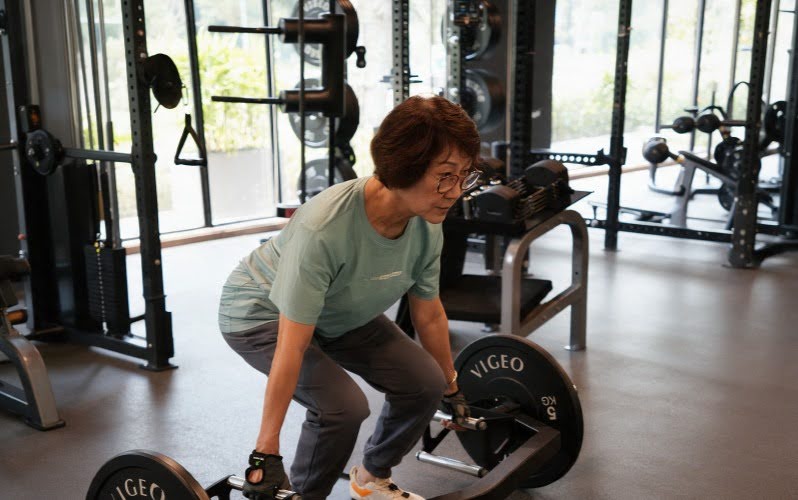
Resistance training is an important part of supporting bone health. As muscles work against resistance, they place mechanical forces on the bones they attach to. Regular, progressively challenging strength exercise can help maintain bone strength while also preserving the muscle needed for balance and everyday function.
Strength training can also support balance, movement control, and the physical capacity needed for everyday tasks.
For someone with osteoporosis, the diagnosis alone does not determine how to begin strength training. Where bone density results are available, factors such as the T-score and whether lower bone density is concentrated at the spine, hip, or another area can help inform exercise planning.
Medical background, medication, previous fractures, current fitness, and training experience also matter. For example, someone with substantially reduced bone density at the spine may require a more cautious approach to exercise selection, positioning, and loading. Someone with previous resistance-training experience and good movement control may begin differently, depending on their overall fracture risk and any clinical advice.
A T-score by itself cannot tell us how much weight someone can safely lift. Previous fractures, particularly spinal fractures, and any medical restrictions also need to be considered. Good technique and previous fitness do not remove those considerations.
The aim is to provide an appropriate challenge that can support strength and bone health over time, while allowing the starting point and progression to reflect the individual.
Some older adults may feel cautious about resistance training, particularly if they are new to lifting, feel unsteady, or have concerns about their bone health.
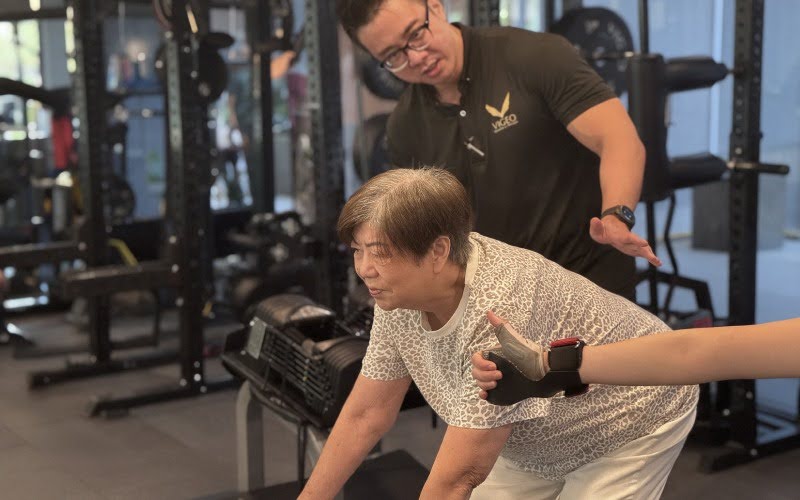
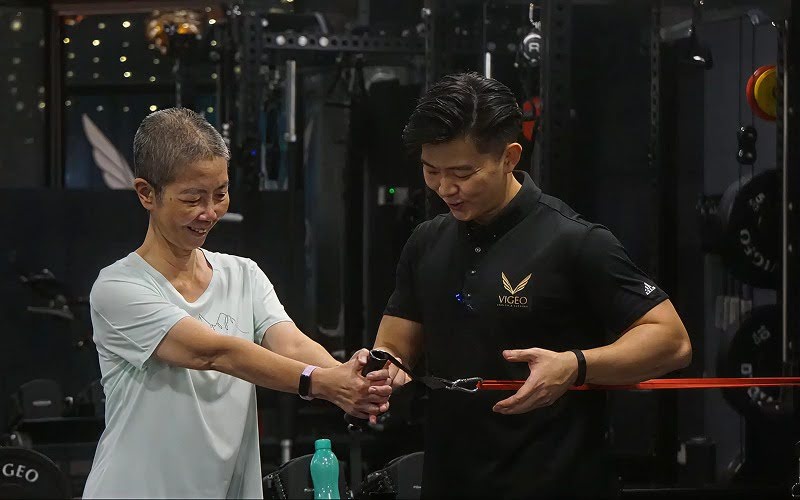
Working with a fitness trainer can help translate these factors into an appropriate starting point, exercise selection, and progression plan rather than basing training on the osteoporosis diagnosis alone.
Balance, Mobility, and Fall Risk
Strength and balance matter alongside bone-loading exercise because fracture risk depends not only on bone strength but also on the likelihood of falling.
Balance exercises can help improve stability, while mobility work can help someone access the range of movement needed for everyday tasks and exercise. These do not provide the same bone-loading stimulus as resistance or weight-bearing exercise, but they can complement a broader osteoporosis exercise program.
The appropriate exercises depend on the individual’s balance, joint comfort, movement ability, and fracture risk.
Who Is Most Vulnerable and Common Concerns
Postmenopausal women, older men, individuals with a family history of osteoporosis, and those with sedentary lifestyles are especially vulnerable. Long-term steroid use, smoking, and certain chronic conditions further increase risk. A frequent concern is whether osteoporosis is irreversible.
Bone health can still be supported after bone density has declined. Exercise can help maintain bone density and may improve it, along with strength and balance. Results vary between individuals, and improvements in strength, balance, and physical function are also valuable outcomes.
People with diagnosed osteoporosis or a high fracture risk may also require medical treatment. Exercise should complement, not replace, osteoporosis medication when prescribed.
Another misconception is that exercise must be demanding from the beginning to be effective.
People do not need to start with highly demanding exercise, but training should become appropriately challenging as their ability improves. For strength and bone health, this may involve gradually increasing resistance or other forms of loading when appropriate.
The right progression depends on the individual’s bone health, fracture risk, current fitness, previous training experience, and clinical advice. A sustainable program can still be challenging; the aim is to increase the demand appropriately rather than keep exercise permanently easy.
For bone health, regular exercise needs to provide an appropriate challenge and progress gradually. Higher-impact activity may provide a stronger loading stimulus, but it is not suitable for everyone, particularly people with osteoporosis, previous fractures, or a higher fracture risk.
Integrating Weight-Bearing Exercises, Resistance Training, Flexibility, and Mobility Training
A bone-health routine generally combines weight-bearing activity, resistance training, and balance work. The exact frequency, impact level, resistance, and exercise selection should reflect the individual’s current ability, health status, and fracture risk.
At Vigeo, two students with the same osteoporosis diagnosis may still follow different exercise programs. Bone density results, affected areas, previous fractures, medical restrictions, current fitness, medication, and training history can all influence the starting point.
One student may need a more cautious approach to loading or particular exercise positions, while another may be ready for greater resistance based on their training background and overall risk profile.
Progression can still involve changes to resistance, exercise selection, range of motion, or support, but those decisions are made within the wider context of the student’s bone health and clinical considerations.
Consistency and Appropriate Progression
Supporting bone health involves regular, appropriately challenging exercise. Progress resistance and impact according to the individual’s current ability, bone health, balance, and fracture risk.
Establishing achievable routines makes it easier to stay active long term.
Bone-health exercise needs to be regular enough to sustain the habit and challenging enough to provide an appropriate training stimulus. As ability improves, resistance or other forms of loading may need to progress, while fracture risk and clinical considerations continue to guide what is appropriate.
For some seniors, training in a gym can provide access to resistance equipment and a wider range of loading options, making progressive strength training easier to structure.
For someone with osteoporosis, the appropriate starting point may therefore differ considerably from another person with the same diagnosis.
Contact us to arrange a consultation and assessment and discuss how strength, weight-bearing activity, balance, and mobility work could be structured around your circumstances.