

Key Takeaways
To help prevent sarcopenia, we focus on maintaining and challenging muscle strength before everyday tasks become noticeably harder.
Age-related muscle loss affects more than muscle size.
Strength training gives muscles a reason to adapt, but the exercise, resistance, and progression should reflect the individual’s current ability.
We look beyond how much weight someone can lift. Movement quality, balance, confidence, recovery, and everyday function also help determine appropriate progression.
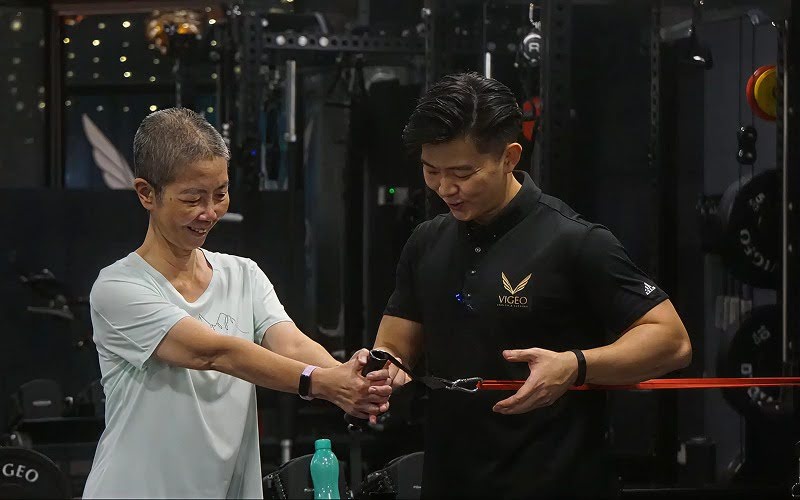
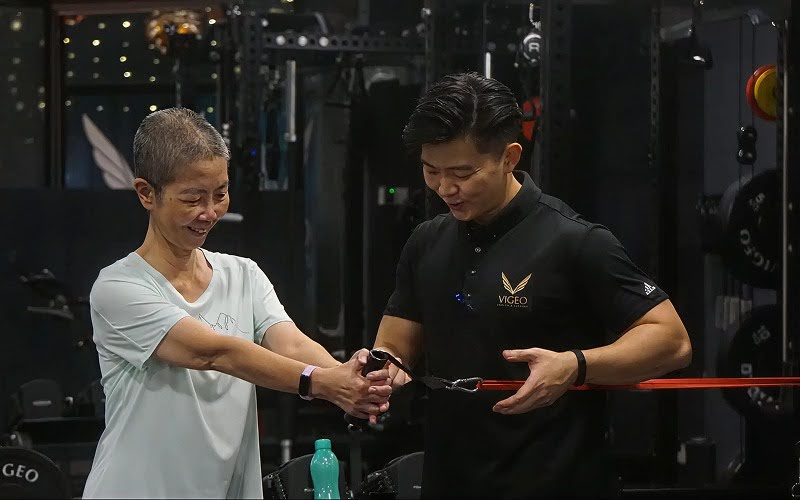
Older adults who want more structure can work with personal fitness trainers familiar with the needs of elderly students to build strength around their current capabilities and goals.
Sarcopenia can gradually affect strength and physical function as we age, but practical steps can reduce its impact. In this article, we explore what we consider when helping older adults navigate sarcopenia, why progressive strength training matters, and how to adapt training to different starting abilities.
Sarcopenia Is More Than Losing Muscle
Sarcopenia is a progressive skeletal muscle condition associated with aging. Reduced muscle strength is an important indicator, while changes in muscle quantity, quality, and physical performance help clinicians assess the condition more fully.
Someone can have low muscle mass without looking thin. Low muscle mass can also occur alongside excess body fat, so appearance alone cannot tell you whether someone may be affected.
That is why we do not view age-related muscle loss as simply an aesthetic concern. Preserving muscle and strength helps maintain the physical capacity needed for everyday movement and independence.
What We Encourage Older Adults to Notice
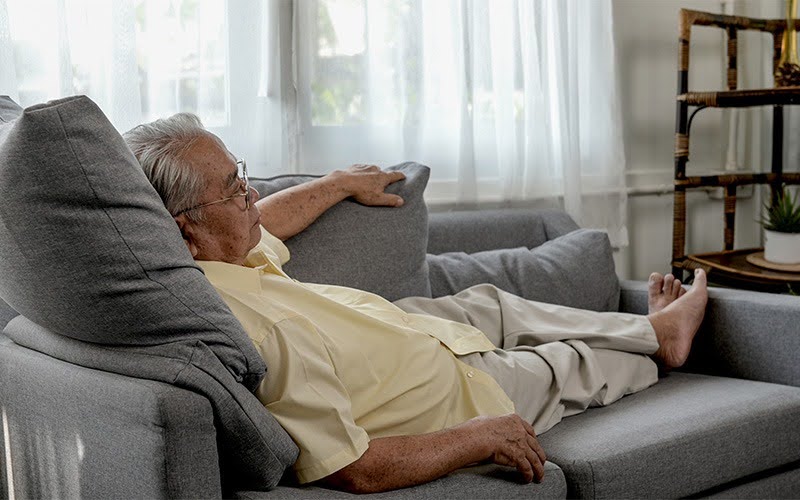
Sarcopenia usually doesn’t announce itself with one obvious change. Muscle mass and strength loss develop gradually, so the first signs may show up during everyday activities.
You might notice that:
- Getting out of a low chair requires more effort
- Carrying groceries feels heavier than it used to
- Walking speed has slowed
- Stairs tire your legs more quickly
- You rely more on railings or furniture for support
- Recovering your balance after a misstep feels harder
These changes do not confirm sarcopenia on their own. However, they can provide useful clues that strength and physical capacity deserve more attention.
How We Assess and Track Muscle Health at Vigeo
At Vigeo, we use bioelectrical impedance analysis to estimate muscle mass and review the skeletal muscle index, or SMI. We also measure grip strength to assess an aspect of muscle function.
Looking at muscle mass and strength together can help us identify potential concerns that may warrant further clinical assessment. These measurements do not diagnose sarcopenia on their own.
We repeat the measurements over time to track changes. Comparisons are most useful when testing conditions remain consistent, as factors such as hydration can affect body composition readings.
For that reason, we do not treat a small change in one reading as proof that muscle has been gained or lost. We look at the pattern over time alongside the student’s strength, function, and training progress.
Why Muscle Loss Can Accelerate With Age
Some reduction in muscle occurs as part of aging, but inactivity can add to that decline. Muscles adapt to the demands placed on them. When those demands decrease, such as after retirement, illness, injury, or simply spending more of the day sitting, there is less stimulus to maintain strength.
Health conditions may also influence muscle wasting in older adults. Arthritis can make someone reluctant to load a painful joint, for example, while illness may substantially reduce normal activity.
This means two people of the same age can start from very different places. One may still walk regularly and have good lower-body strength. Another may have spent several years avoiding stairs or longer walks because of joint discomfort or poor balance.
Good strength programming has to account for that difference.
How Strength Training Helps Address Sarcopenia Risk
When we talk about strength training for older adults, we are not talking about simply putting a heavy weight in someone’s hands.
Resistance exercise gives the muscles a progressive challenge. Singapore’s Physical Activity Guidelines recommend muscle-strengthening activity on at least two days each week for older adults, alongside activity that develops functional balance.
The key word is progressive. To continue developing muscle size and strength, the training stimulus needs to increase gradually as the student becomes more capable. This often means increasing resistance over time, while additional controlled repetitions or a greater appropriate range of movement can also contribute to progression.
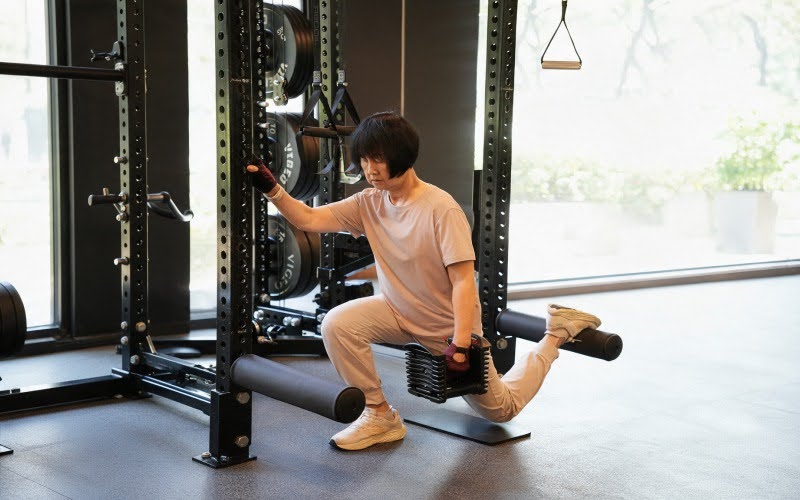
For example, a student may be able to stand up from a chair but lose control when lowering back down. We would first look at their control, comfortable range of motion, joint alignment, discomfort, and any compensations.
As their movement becomes more consistent, we can increase the training demand appropriately. This may involve adding resistance, completing more controlled repetitions, or working through a greater comfortable range.
Why We Prefer Consistent Progress Over Intense Workouts
Trying to make up for years of inactivity with a few very demanding sessions is unnecessary. For most older adults, regular training that can be progressed over time is more useful than occasional workouts that make recovery difficult.
Progression should challenge the muscles enough to keep adapting while still allowing the student to train consistently. A personal trainer who works with seniors should therefore consider both the resistance used and how well the student tolerates the program over time.
At Vigeo, we look for controlled movement through an appropriate range before increasing the training demand. Once that foundation is consistent, we can gradually increase resistance, repetitions, or range according to the exercise and the student’s ability.
We Train for Function, Not Muscle Mass Alone
When older adults tell us they want to become stronger, the underlying goal is often something more practical.
They want to travel without worrying about stairs. They want to carry their own shopping. They want to get down to the floor and back up again. They want to feel steadier when walking outdoors.
This changes how a trainer thinks about the program.
Lower-body strength matters for standing and stair climbing. Hip and trunk control contribute to balance. Grip strength matters when carrying objects. Coordination becomes important when several of these abilities have to work together.
So when the goal is to address sarcopenia, preserving muscle matters, but the outcome we care about is what that muscle lets a person keep doing.
Individualization Becomes More Important With Age
Older adults are not one homogeneous group. Two older adults can be the same age and share the same goal of getting stronger, yet need very different programs. One may have good mobility but limited strength, while another may be reasonably strong but need more support with balance, joint comfort, or confidence.
This is where individual programming becomes especially important for older adults. If everyone follows the same workout, one person may not receive enough challenge to stimulate strength, while another may be pushed beyond what their current balance, mobility, or recovery capacity can comfortably manage.
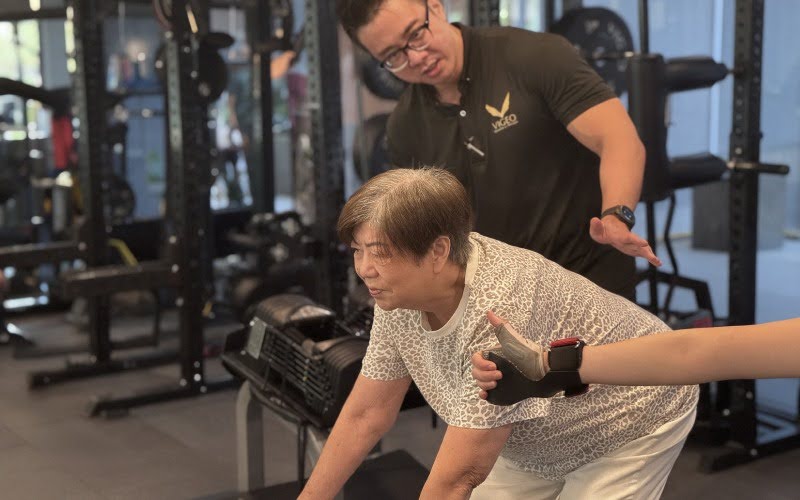
For example, at Vigeo, we conduct semi-private training that lets students share a session while following their own programs. This means each person can work at an appropriate level even when training alongside others. For example, one person may be progressing resistance on a lower-body exercise while another student works on a supported variation to build control and confidence.
For older adults working to prevent sarcopenia, this individualization matters because effective resistance training needs enough challenge to stimulate the muscles while still being appropriate for the person’s current ability.
If you’re looking for a personal fitness trainer in Singapore, ask: How is my starting point assessed? How will the program change if an exercise is uncomfortable? What tells the trainer I am ready to progress?
Nutrition Matters Alongside Strength Training
Sarcopenia prevention also extends beyond exercise. Singapore’s health guidance emphasizes both regular physical activity and adequate nutrition for older adults.
Strength training challenges the muscles, while eating enough food and protein supports muscle maintenance and recovery. A practical starting point is to include a protein source at each main meal, such as fish, chicken, eggs, milk, yogurt, tofu, tempeh, or beans. For someone who usually has only toast and coffee for breakfast, adding eggs, yogurt, or a suitable soy option can be a simple first step.
Overall food intake matters too. Poor appetite, difficulty chewing, or regularly skipping meals can make it harder to meet nutritional needs, even when someone is exercising consistently.
Building Strength Before You Need It
We sometimes hear, “I already walk every day and can still climb stairs, so why should I start strength training?”
Walking is a valuable habit, and we encourage students to keep it, but it doesn’t provide the same progressive resistance for all major muscle groups. Starting while everyday activities still feel manageable gives you an opportunity to build and preserve the strength that supports them.
We also hear from people who worry that they are too weak or unfit to begin. You do not need to get fitter before coming to Vigeo. We start with what you can currently manage and adjust the exercise, support, range of motion, and resistance from there.
One of the most useful messages we can give older adults is that you don’t need to wait until weakness significantly limits your daily life to do something about it.
You can introduce strength training while you are still active, and adapt it if strength, balance, or mobility have already declined.
The starting point simply changes.
Our role as trainers is not to make every older adult train the same way. It is to provide enough challenge to encourage adaptation while respecting the person’s current ability, health considerations, and goals.
If you are looking to prevent sarcopenia, maintain your strength, or regain confidence after becoming less active, speak to our trainers about a program that reflects what you can do now and what you want to keep doing in the years ahead.