

Many seniors find themselves relying on various prescriptions to manage health conditions that often accompany later life. This naturally leads to questions about the best paths to wellness, such as whether something as fundamental as physical activity plays a role comparable to or even greater than medication.
Research suggests that exercise can be a medicine for many age-related health concerns. However, this isn’t about choosing one over the other, but knowing the impact that consistent movement can have on your health, sometimes even rivaling the effects of prescribed drugs.
At Vigeo, we believe that while medicine is often necessary, exercise is the tool that empowers you to take back control of your health. Pills may manage symptoms, but strength training builds resilience in your body so you can live independently, with less reliance on medication, for longer.
The cellular impact of aging
Beyond the visible signs like wrinkles and gray hair, aging also occurs deep inside the body at a cellular level. Chronic inflammation, oxidative stress, and mitochondrial decline accelerate the breakdown of tissues and organs over time. These changes can shift metabolism, increase fat storage, and cause a progressive loss of muscle mass, leaving the body more vulnerable to disease.
Furthermore, a sedentary lifestyle can also speed up this decline, hastening the biological aging process. However, there is research that shows that regular exercise can help slow cellular aging. By reducing oxidative stress and inflammation, exercise preserves mitochondrial health, maintains energy production, and strengthens the body’s resilience against chronic illness. In short, exercise does more than strengthen muscles, as it also helps keep your cells younger for longer.
While all movement helps, research consistently shows that strength training in particular slows cellular decline by preserving muscle and bone tissue. At Vigeo, we see this firsthand, with seniors who begin strength training not only moving with less pain but also experiencing more energy and confidence in their daily lives.
Why is exercise so important for older adults?
For older adults, exercise is not just about fitness. It protects independence, energy, and quality of life. It works as prevention and therapy, which can lower the risk of many chronic diseases, slow biological aging, and support the ability to live well for longer.
Moreover, these points are reinforced by a paper about the global consensus on exercise for healthy longevity.
Long-term gains
Exercise has been shown to reduce mortality and increase life expectancy. According to a 12-year Norwegian study, which involved 6,000 men aged 73 and above, a brisk daily walk reduced the risk of death by almost half compared to those who did not engage in regular physical activity.
Beyond extending your years, consistent activity can reduce the risk of a wide range of debilitating diseases, including heart disease, stroke, various cancers, such as those of the breast, lung, and stomach, and type 2 diabetes. Regular exercise can also help improve cognitive health, reducing the risk of dementia, including Alzheimer’s and Parkinson’s, and depression.
Physiologically, exercise acts on the cellular and molecular drivers of biological aging. It helps improve insulin sensitivity, vascular function, mitochondrial health, muscle protein synthesis, bone remodeling, and neuroplasticity. Over time, these changes help slow aging rates and improve resilience.
Furthermore, progressive resistance training is particularly important and is indispensable for older adults with frailty, sarcopenia, or osteoporosis, and for those in hospital or residential aged care. This is because building muscle and bone strength can help improve capacity for daily tasks, lower fracture risk, and support safe mobility.
Meanwhile, multicomponent programs that combine strength, aerobic work, balance, flexibility, and simple cognitive tasks improve the hallmarks of frailty. This combined approach helps raise body mass where needed, increase strength and mobility, lift daily activity level and energy, and improve cognition. It can also help reduce the risks of falls and keep people independent.
Exercise carries a clear dose response, with the right type, frequency, and volume depending on the person and the goal. Prescriptions should be tailored and monitored like any medical treatment, with progression based on response. This is the essence of precision exercise for older adults.
It is also important to note that well-designed exercise programs can help reduce healthcare use and inappropriate medication. As such, integrating exercise into routine care can ease the burden of polypharmacy and improve outcomes when combined with medicines.
Ultimately, these multifaceted benefits work together to help prevent disabilities and preserve independence for as long as possible. And this is why exercise is essential for older adults.
Immediate benefits
Even small amounts of physical activity can have an immediate effect on your mental and emotional well-being. Exercise serves as a pick-me-up, helping to reduce feelings of anxiety and stress. Additionally, physical activity is great for your sleep, as it helps promote a deeper, more restful sleep.
Cardio improves heart health, but strength training adds something even more crucial for seniors, which is the ability to lift, carry, balance, and recover from stumbles. These functional abilities directly translate into fewer falls, fewer fractures, and more independence in later years.
Strength training is often seen as slow to show results, but many of our clients notice improvements almost immediately. Within weeks, they report feeling steadier on their feet, having better posture, and being able to get out of chairs or climb stairs with less effort. These changes are medicine in action.
New research on exercise and health outcomes
Recent studies continue to show that exercise can be used as both prevention and treatment across cardiometabolic, musculoskeletal, neuropsychological, and cancer care.
The most effective approach for older adults is a tailored mix of aerobic, resistance, balance, and flexibility work delivered through both structured sessions and integrated lifestyle activity, with clear dosing and progression and with coaching that monitors response and adapts the plan.
Every movement counts, regardless of intensity
A groundbreaking study, involving 871 individuals aged 65 to 79, was conducted by researchers from örebro University and utilized activity trackers to measure how much time older adults spent on daily activities of varying intensity.
The research revealed that those who did not meet the recommended physical activity guidelines of the study, which were 2.5 hours of pulse-raising activities per week, or being sedentary for less than 8.3 hours per day, were associated with a significantly lower risk of metabolic syndrome.
This crucial research highlights that all exercise, even light activity, is of considerable importance for the overall health of older adults. It highlights that every step, every movement, contributes positively to your well-being.
While light activity is important, our programs always prioritize strength training first because it is the proven foundation for resilience in later life.
Is exercise more effective than medication?
One of the most remarkable findings comes from research directly comparing exercise to typically prescribed medications. For major health concerns like coronary heart disease, pre-diabetes, and stroke, this research often reveals that exercise matches the effectiveness of medication.
For reducing mortality in cases of heart disease and pre-diabetes, exercise and drug interventions had similar positive outcomes. Meanwhile, exercise provided better results than pharmaceuticals in patients rehabilitating after a stroke. The research highlighted this by finding that people with heart disease who exercised, but did not use commonly prescribed medications (including statins or antiplatelet drugs), faced the exact same survival risk as patients who were taking those drugs.
There’s research that helps strengthen this argument further. It shows that endurance exercise is not only safe but strongly linked with increased longevity. Elite runners lived on average 4.7 years longer than the general population, while a meta-analysis of over 24 studies including 165,033 former elite athletes found lower risks of cardiovascular disease and cancer-related deaths. These findings confirm that exercise is not simply a complement to medication but a powerful intervention in its own right, one that helps extend both lifespan and healthspan.
It’s critical to emphasize, however, that this research does not suggest stopping medication without consulting a medical professional. Instead, it demonstrates that exercise could be an equally effective intervention, working alongside or, in some cases, providing similar benefits to pharmacological treatments. This strengthens the argument that exercise versus medication for seniors isn’t always a case of one or the other, but rather an integrated approach where physical activity plays a central role.
ed decline, and the reasons to make it a priority are clear.
1. Combating muscle loss
Strength training directly helps women preserve and even rebuild muscle mass and bone density. This helps fight back against sarcopenia and its associated risks, such as weakness, frailty, and debilitating falls.
2. Boosting metabolism and supporting a healthy weight
Compared to fat, muscle is a more metabolically demanding tissue. It requires more calories to sustain, even at rest.
As such, building and maintaining muscle helps combat the natural slowdown in metabolism that often accompanies midlife, making it indispensable for managing body weight in a healthy, sustainable way.
3. Strengthening bones and preventing osteoporosis
Bone health is a significant reason why women in their 40s should take up weight training. Once menopause occurs, bone loss speeds up dramatically, which increases the risk of osteoporosis.
Strength training helps by putting productive stress on your bones. This exercise stimulates bone-building cells and improves your overall bone density.
4. Reducing injury risk and supporting joint health
Strong muscles built through exercise, like strength training, protect your joints by stabilizing your knees, bracing your hips, and protecting your spine. This leads to improved posture and enhanced balance, both of which help reduce the risk of falls and common injuries.
5. Enhancing longevity, mood, and confidence
Strength training offers more than just physical advantages. Studies link it to better cognitive health, an improved mood, and a longer, healthier lifespan.
Physical activity releases endorphins, which can improve feelings of pleasure and relaxation. It is also a powerful outlet for managing the stresses of midlife. Finally, there is a profound mental and emotional boost that comes from feeling physically strong and capable in your own body.
The approach to getting started

While you can’t entirely stop the aging process, staying physically active can slow down the processes that often lead to disease and immobility.
Therefore, the goal of exercise for older adults is to fundamentally change the way the body functions, not merely to increase muscle size. It’s about retaining your independence and vitality.
Starting simple and slow
If you’re a sedentary older adult considering a new fitness journey, the very first step should be to get a thorough medical check-up. This step is to rule out any underlying conditions that might prevent them from working out.
Once cleared, it is recommended to start slow and steady, such as beginning with short intervals of light-intensity activity for 5 to 10 minutes at a time, and then gradually increasing both the duration and frequency of your sessions.
The Health Promotion Board’s National Physical Activity Guidelines recommend that adults and seniors engage in moderate-intensity activity, such as brisk walking, for 150 minutes a week, or 75 minutes of vigorous aerobic activity, like jogging. Additionally, the board recommends incorporating strength training into the routine twice a week to help seniors continue living life independently while reducing fall risks and potential fractures.
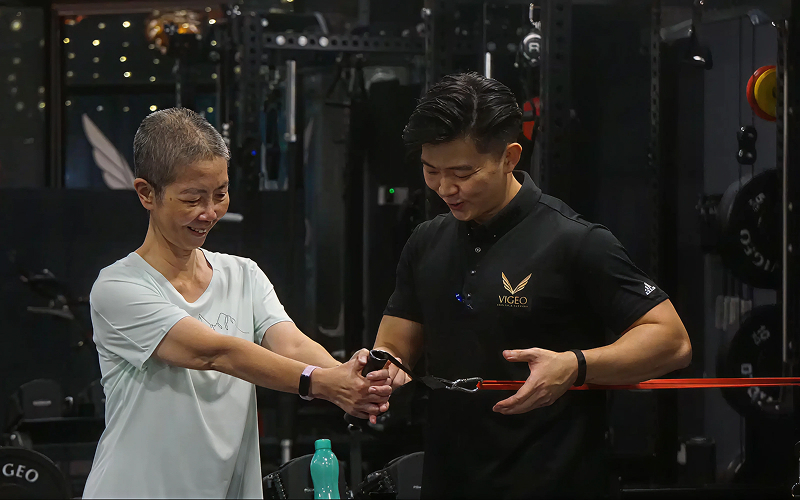
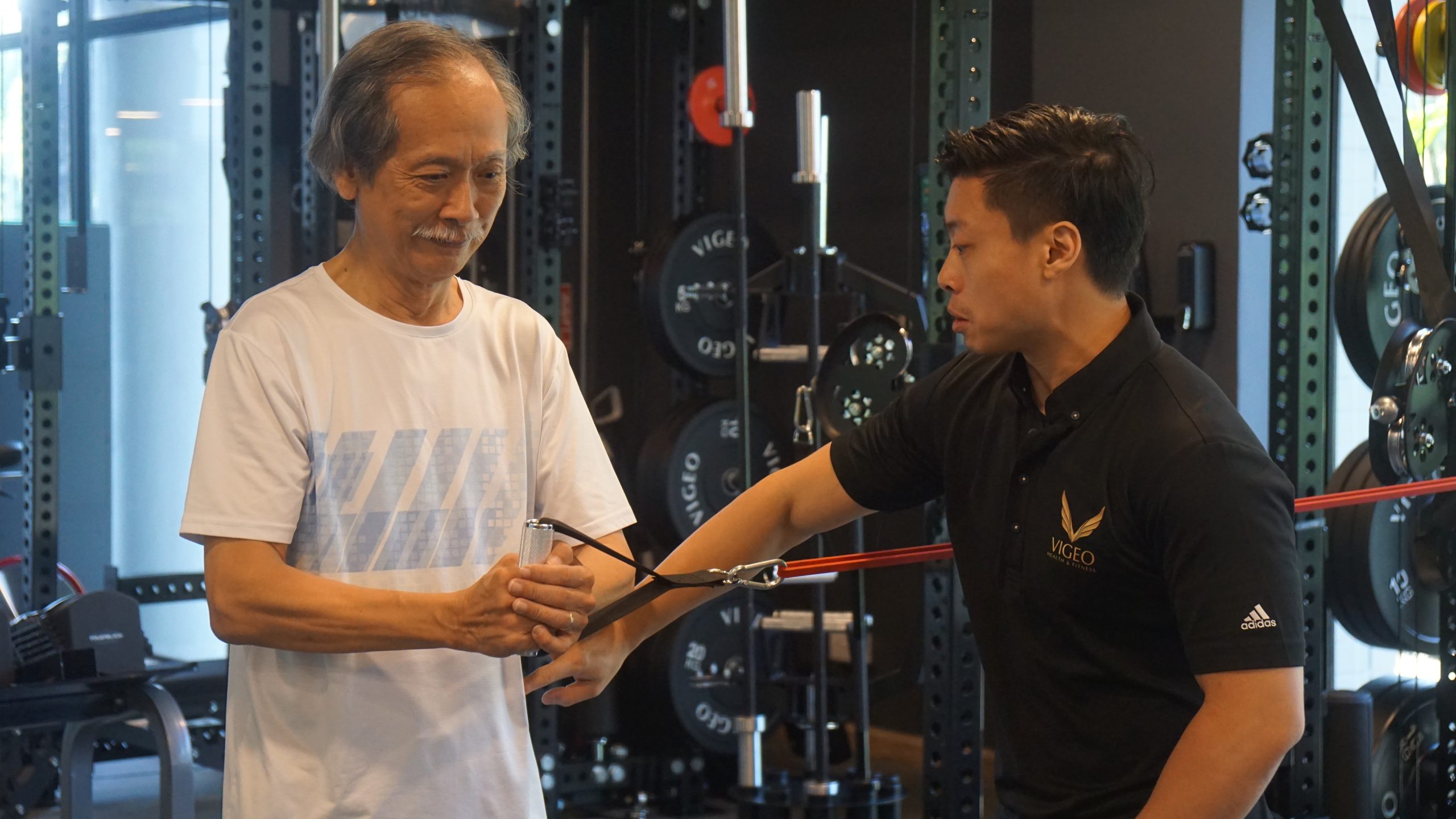
Most seniors think strength training means heavy weights and intimidating gyms, but it doesn’t have to. At Vigeo, our dedicated personal trainer for the elderly starts clients with simple bodyweight or banded movements, seated exercises if needed, and gradual progression. Over time, we help clients move toward free weights, which build the kind of strength that protects joints and improves mobility.
What to do if exercise hurts
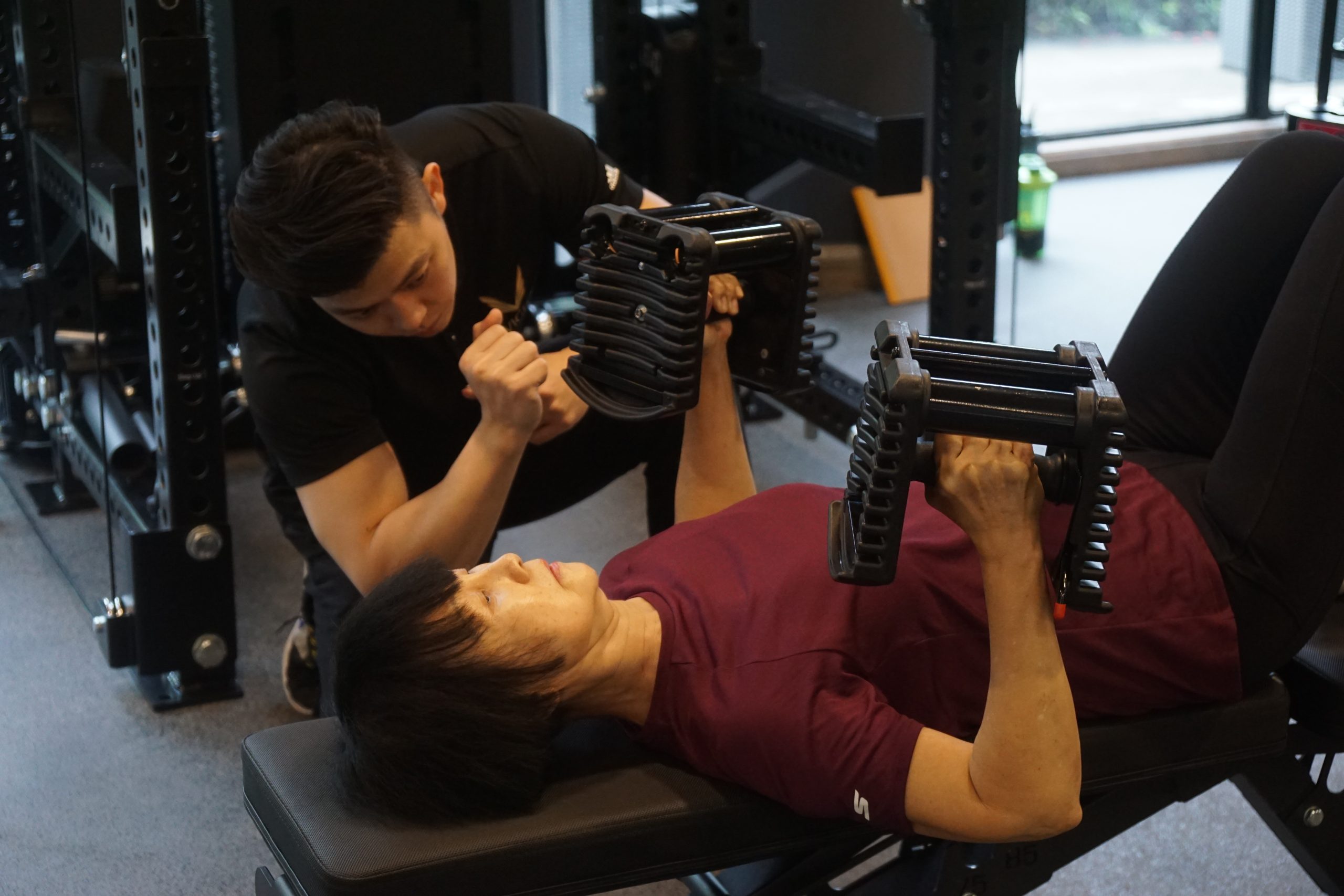
The truth is, many seniors come to us with pain, including arthritis, backaches, and old injuries. Rather than avoiding exercise, we design strength training programs that work around limitations and can help reduce pain over time. We’ve seen clients who struggled with knee pain regain the ability to walk stairs, and clients with osteoporosis rebuild bone density through safe, progressive loading.
If you experience discomfort, chest pain, breathlessness, or excessive joint pain during exercise, stop immediately and consult a healthcare professional. It’s essential to distinguish between muscle fatigue and actual pain.
For conditions like osteoarthritis, where exercise might seem counterintuitive, consistent movement can actually reduce pain and improve mobility. However, this often requires a collaborative effort with a physician and a physiotherapist. Getting guidance from a qualified fitness instructor can also help you navigate this safely and effectively, ensuring your routine is beneficial rather than harmful.
Medication has its place, but it cannot replace the vitality, strength, and independence that exercise, especially strength training, provides. At Vigeo, we never push the outdated ‘no pain, no gain’ mindset. Instead, we teach our clients how to distinguish between healthy effort and harmful strain. This ensures exercise feels safe, builds confidence, and becomes something they look forward to and not fear.
Our mission is to give seniors the tools to move better, feel stronger, and live with confidence, without fear of decline. Whether through one-on-one sessions at our gym in Singapore or guided programs with our online fitness trainers, we help you make exercise your most powerful medicine.
Moreover, our personal training gym in Singapore is intentionally designed to be a safe and welcoming space. Whether you’re a first-timer just starting your fitness journey or a long-time client focused on advanced goals, you’ll find an environment that supports you every step of the way.
Book a consultation with us today to speak with our on-the-ground or online fitness trainers, who will help guide you in taking the first step toward living an active life in your golden years.