

Key Takeaways
- A personal trainer for senior citizens should understand safe exercise progression in the gym, not just general fitness.
- Personal training for the elderly should focus on daily function, balance, mobility, and long-term independence.
- Age-appropriate strength programming helps seniors improve safely without feeling rushed or overwhelmed.
- Vigeo supports seniors with tailored coaching in a safe, structured, and encouraging environment.
Strength training is increasingly recognized as one of the most effective ways for older adults to maintain their health, mobility, and independence. Regular resistance exercise can help seniors preserve muscle mass, improve balance, strengthen bones, and stay capable in everyday activities.
However, the exercises themselves are only part of the equation. What matters just as much is how those exercises are selected, adapted, and progressed according to the individual.
If you are an older adult comparing personal trainers, we recommend looking beyond marketing claims or a trainer’s social media following. What matters more is whether the trainer can assess your starting point, adapt exercises as needed, and progress training at a pace that matches your strength, balance, mobility, and confidence. That combination of experience and coaching judgment is what helps make senior strength training safer, more individualized, and more sustainable over time.
Why Strength Training Is Important for Seniors
Older adults are not always concerned about “strength” in the conventional gym sense. More often, they worry about everyday tasks that have become harder, such as climbing stairs, carrying groceries, getting out of a chair, walking longer distances, or staying steady on their feet.
These changes can be related to:
- Loss of muscle mass and strength
- Reduced balance and coordination
- Lower bone density
- Joint stiffness
- Reduced confidence in movement
For example, someone who feels less steady may begin avoiding certain activities, which can mean fewer opportunities to use and maintain their strength.
This is why senior strength training should support everyday life, not simply exercise for its own sake. The goal is to help our students build the strength, stability, and confidence they need for the activities that matter to them.
Look for Experience Working With Older Adults
Not every personal trainer has experience coaching older adults, and that experience shapes how we plan a session from the start. Many trainers work mainly with younger students whose goals center on weight loss, athletic performance, or physique development. Older adults often have different priorities.
Strength, mobility, balance, movement confidence, previous injuries, and current ability can all influence the appropriate starting point.
A trainer experienced in senior strength training understands how to:
- Adapt exercises for different mobility levels
- Support safe exercise progression
- Address age-related physical changes
- Build confidence in movement
- Focus on long-term health rather than short-term performance
In practice, two students of a similar age and with similar goals may still need very different starting points based on factors such as movement quality, balance, confidence, and training history.
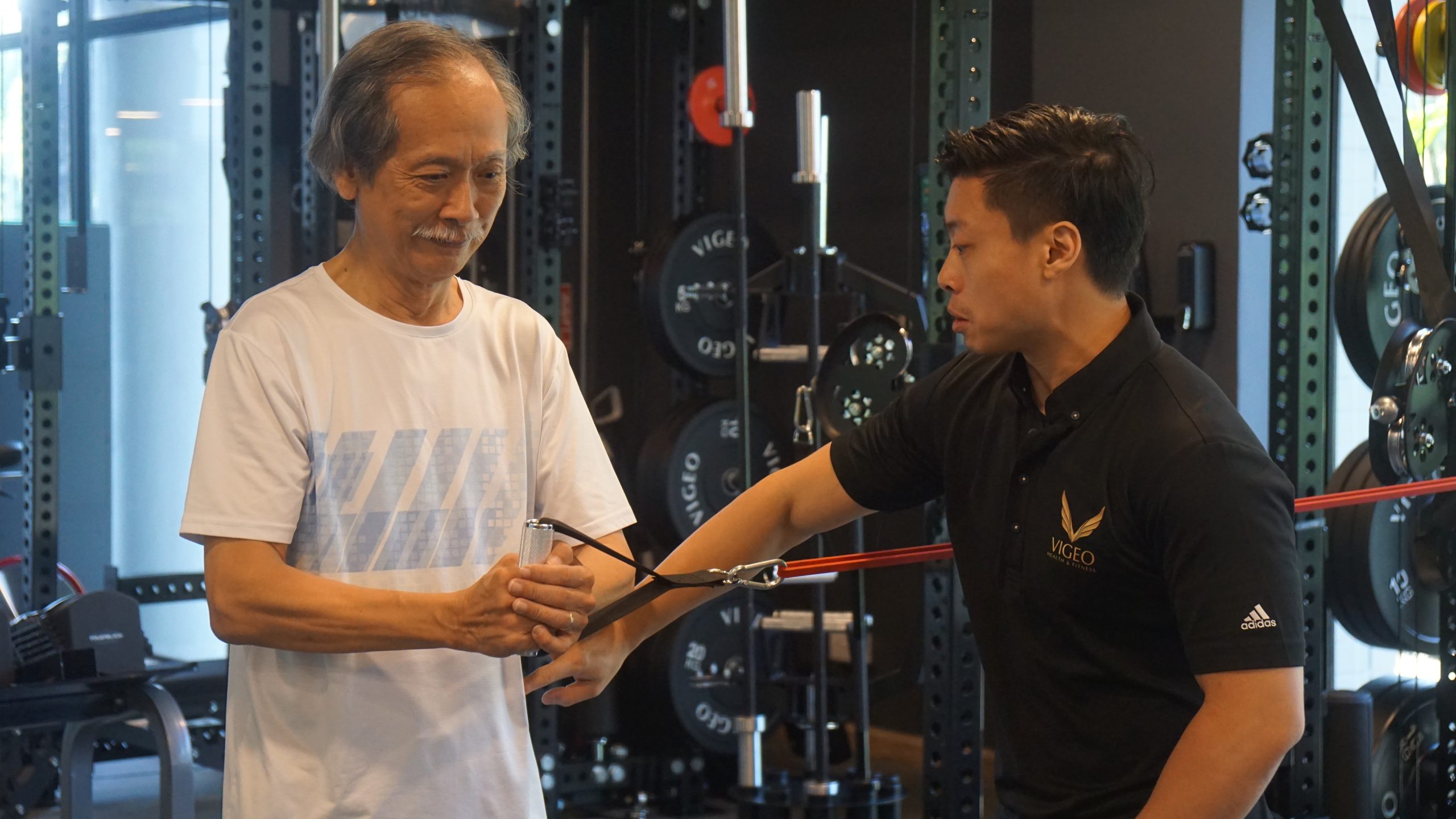
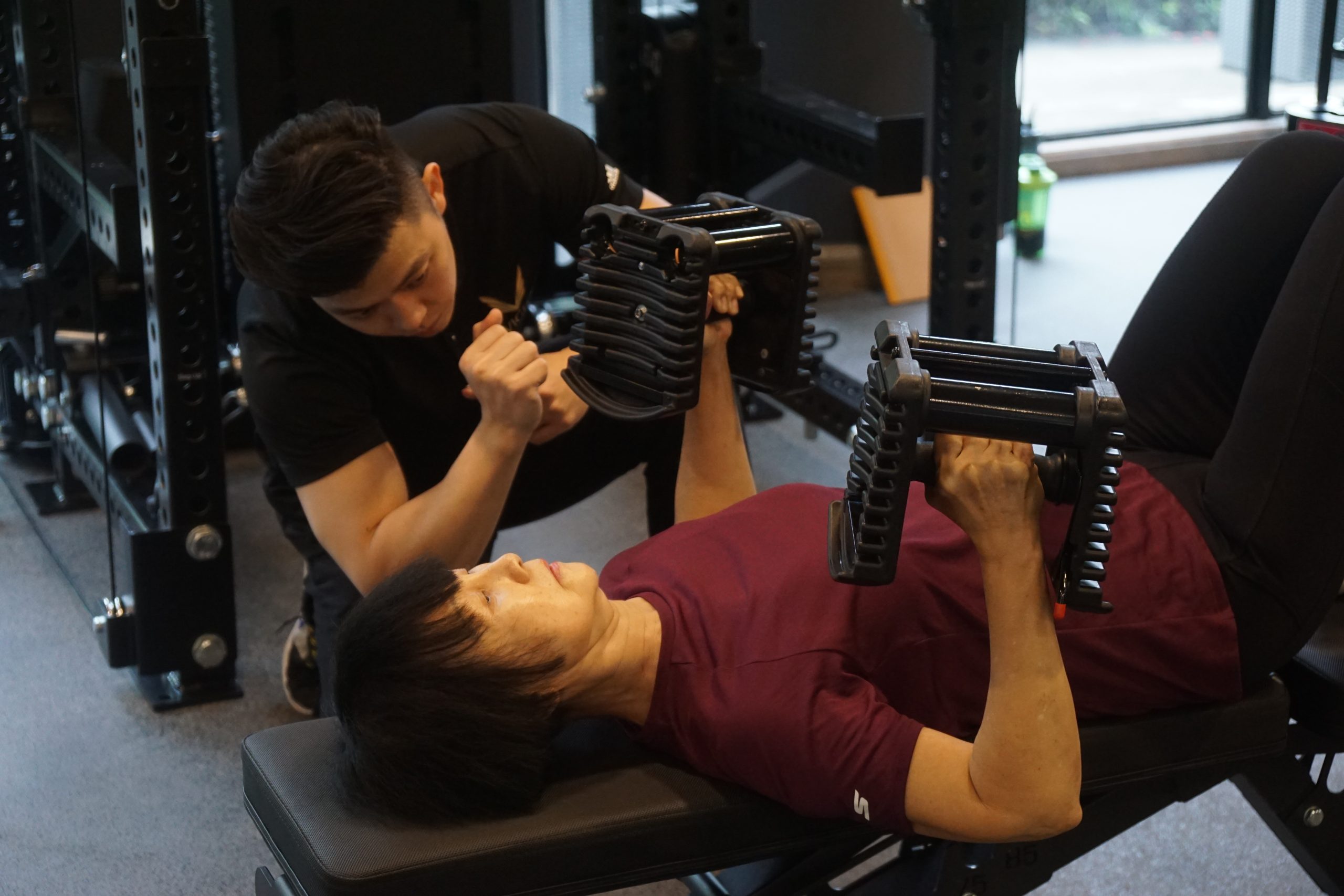
This is also how our semi-private personal training works. Students may share the same session, but each follows an individual program suited to their current ability and goals. One person may be ready to increase resistance sooner, while another may benefit from more time to build control and familiarity with the movement first.
Choose Someone Who Understands Functional Strength
For older students, strength training isn’t just about lifting heavier weights in the gym.
A personal trainer understands that strength should translate into better daily function.
This means designing programs that support activities such as:
- Standing up from a chair
- Walking comfortably
- Climbing stairs
- Carrying household items
- Maintaining balance during movement
- Reducing fall risk
Functional progress may show up in everyday tasks, such as getting out of a chair more easily, relying less on a railing, or feeling steadier while carrying groceries
This is why we treat functional strength as more than a gym metric. A good personal trainer for older students should connect each exercise to a practical movement goal, so training supports the activities older citizens want to keep doing confidently and independently.
Ensure They Can Adapt to Existing Health Conditions
Health conditions, previous injuries, or medical histories can influence how students exercise. Common examples include:
- Osteoarthritis
- Osteoporosis
- Diabetes
- High blood pressure
- Previous injuries
- Joint replacements
- Chronic back pain
Diagnosis alone doesn’t tell us how someone should train. Two students with osteoarthritis, for example, may differ considerably in their mobility, confidence, pain levels, and tolerance for certain movements.
This is why we look at how each person actually moves and responds during training. Depending on what we observe, we may adjust exercise selection, range of motion, resistance, pace, or support rather than removing an exercise altogether.
That is where personalized movement coaching becomes particularly important. Instead of applying a generic workout plan, a trainer should work within each individual’s abilities and limitations, adapting the program as their strength, confidence, and tolerance change over time.
Find a Trainer Who Is Caring and Patient
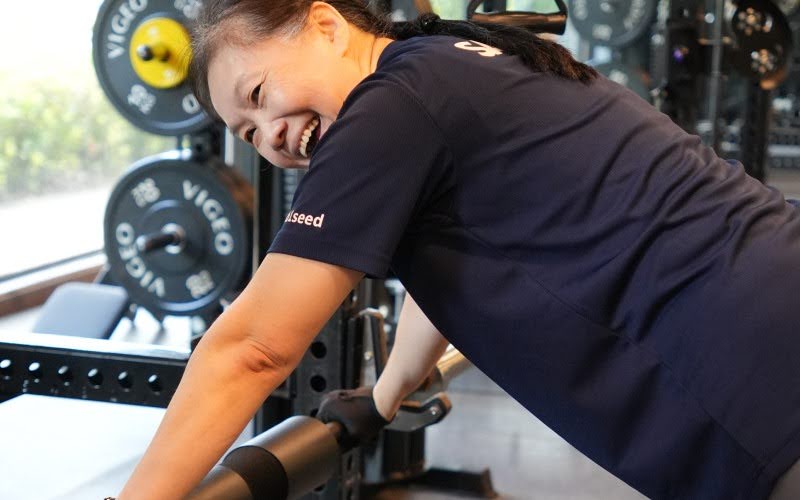
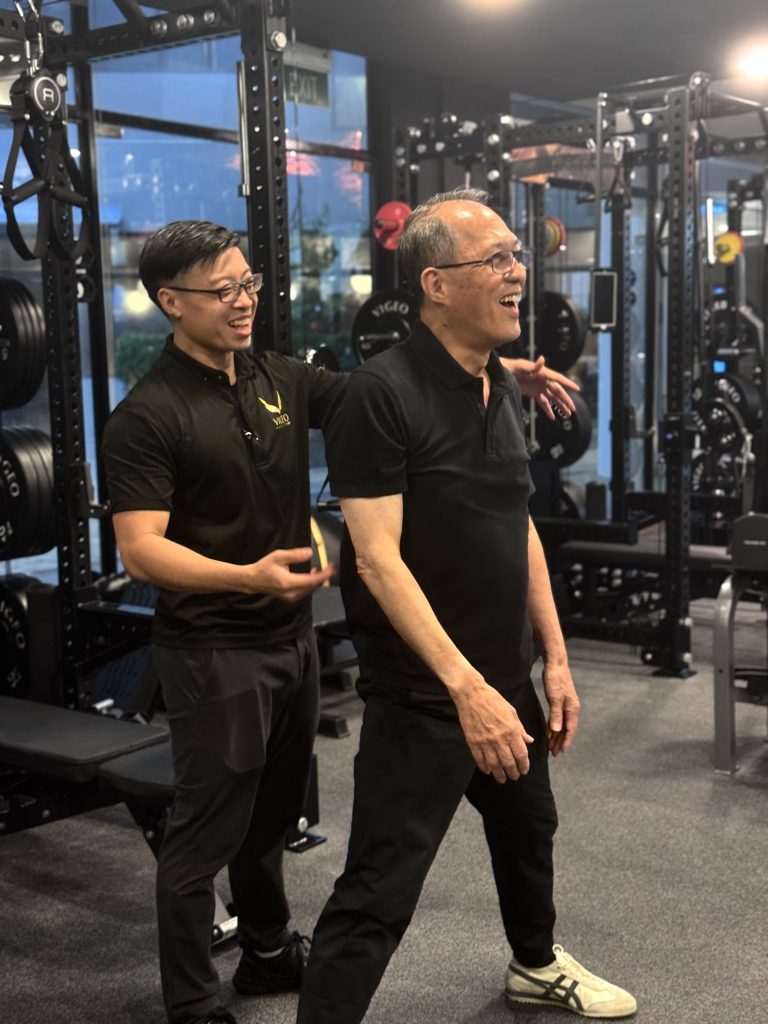
Most students may walk into strength training carrying fear, self-doubt, and a quiet worry that they do not belong. The right trainer understands this. They create an environment where it is safe to be a beginner, safe to ask questions, and safe to go slowly.
What this looks like in practice:
They go at your pace. They adjust progress to where you are today, not where the program expects you to be.
They celebrate small wins. Getting up without using your hands. Walking further. Standing taller. A good trainer notices these moments and names them.
They never rush you. Not in the first session, not in the thirtieth. Patience allows our elderly students to feel comfortable.
For an older adult to keep showing up, they need to feel respected, seen, and genuinely supported.
That’s why our personal trainers carry these qualities.
Communication Skills Matter
Technical knowledge matters, but in our experience, communication often determines whether a student feels comfortable enough to keep training consistently.
A personal trainer for seniors should be able to:
- Explain exercises in the gym clearly
- Demonstrate proper technique
- Provide constructive feedback
- Build confidence gradually
- Encourage consistency
Students who are new to strength training may feel uncertain in a gym environment, especially when the exercises or equipment are unfamiliar. Clear communication can make the process easier to understand. A trainer should explain movements clearly, demonstrate what is expected, check that the student understands, and give them space to ask questions.
Good communication is not simply about giving instructions. It is about helping students understand what they are doing and why, so they can train with greater confidence and recognize their progress over time.
Look for Progressive, Not Aggressive, Programming
One common misconception is that effective strength training requires pushing to extremes.
In reality, older adults often benefit most from gradual, progressive improvements.
A good trainer understands how to:
- Increase resistance safely over time
- Balance challenge with recovery
- Monitor fatigue levels
- Prevent unnecessary strain
- Build sustainable exercise habits
At Vigeo, progression does not always mean adding more weight. Depending on the student, the next step may involve better movement control, increasing resistance, reducing assistance, or gradually increasing the range of motion.
This kind of age-appropriate strength programming helps older individuals improve without feeling overwhelmed or unnecessarily pushed. Consistency over months and years generally produces better results than short bursts of intense training.
Questions to Ask Before Choosing a Personal Trainer
Meeting a trainer for a consultation or trial session lets you see how they approach senior strength training. Asking a few practical questions can help you decide whether they are the right fit.
Consider asking:
How do you assess new clients before they begin training?
A good trainer should ask about your medical history, previous injuries, current activity level, mobility, and personal goals before recommending any exercises.
Have you worked with older adults who have similar health conditions?
While every individual is different, experience working with elderly citizens managing conditions such as arthritis, osteoporosis, or diabetes can help the trainer make appropriate exercise modifications.
How do you decide when to increase exercise intensity?
Look for an answer that emphasizes gradual progression based on your movement quality, confidence, and recovery rather than following a fixed schedule.
What will a typical first session involve?
Rather than starting with an intense workout, the first session should usually focus on movement assessment, learning proper technique, and establishing a comfortable starting point.
When would you recommend that I speak with my doctor or another healthcare professional?
A responsible trainer understands the limits of their role. If new symptoms arise or you need medical clearance, they should be willing to refer you to the appropriate healthcare provider.
Choosing a personal trainer is not just about credentials. It is also about finding someone whose assessment process, communication style, and coaching approach give you confidence to train safely over the long term.
Red Flags to Watch Out For
When searching for a personal trainer for seniors, keep these warning signs in mind.
These may include:
- One-size-fits-all programs
- Lack of interest in medical history
- Excessive focus on aesthetics or weight loss
- Poor exercise supervision
- Unrealistic promises of rapid results
- Failure to modify exercises when needed
A trainer who prioritizes safety, education, and long-term progress is often a better fit for senior strength training than one focused solely on performance metrics.
Why Seniors Choose Vigeo for Strength Training
At Vigeo, we know senior strength training is about more than exercise alone. It is about maintaining independence, preserving mobility, reducing fall risk, and supporting quality of life as people age.
Our team specializes in evidence-based exercise programs designed to meet the unique needs of older adults. Rather than applying generic gym routines, we take the time to understand each individual’s health status, physical abilities, and personal goals before developing a tailored program.
We focus on practical outcomes that matter in everyday life, including improving strength, balance, mobility, and confidence in movement. Our approach emphasizes safe progression, personalized movement coaching, and sustainable exercise habits that can support active aging over the long term.
Whether an individual is new to strength training or looking to regain confidence after injury, illness, or inactivity, we provide the guidance and support needed to exercise safely and effectively.
Looking for a personal trainer for seniors in Singapore? Vigeo provides a supportive environment where seniors can train safely, ask questions, and progress at a pace that suits their needs.
Conclusion
Finding the best personal trainer in Singapore is about finding someone who understands the realities of aging and can deliver safe, personalized, and effective guidance to seniors.
The right trainer helps elderly individuals build strength, move with greater confidence, and continue doing the activities they enjoy for years to come.
If you are looking for professional guidance on senior strength training, contact us today. We would love to discuss your goals and show you how our personalized exercise programs can help you stay strong, active, and independent at every stage of life.