

Key Takeaways
Feeling stiff doesn’t always mean you need more stretching. Strength, movement control, joint comfort, and the ability to use an available range of motion can also influence how easily someone moves.
Strength training remains important for older adults because age-related changes in muscle strength and power can affect everyday activities such as standing, walking, and recovering balance.
Select balance exercises based on what needs improvement. Different exercises challenge stability, coordination, weight transfer, and control in different ways.
Appropriate strength training can help develop strength, power, and balance, which can carry over to everyday activities and support greater confidence and physical capability in daily life.
You can adjust exercise difficulty through resistance, support, range of motion, body position, and exercise choice, rather than expecting every student to perform the same version.
A personal trainer for seniors can help determine an appropriate starting point and progress the challenge according to the student’s ability and movement control.
Why Stretching Alone Is Not Enough for Senior Mobility
Stretching is often the first response when movement begins to feel stiff or restricted. However, stiffness doesn’t necessarily mean flexibility is the only limitation.
A person may have enough range of motion for a task but lack the strength or control to use it effectively. Joint discomfort, reduced stability, and other movement limitations may also contribute.
For this reason, improving movement in later life may involve a combination of flexibility work, controlled movement, balance training, and progressive strength training. The appropriate mix depends on what the person finds difficult, the range they can access, and how well they can control it.
Loss of Muscle Strength and Power with Age
Sarcopenia is a gradual, age-related loss of skeletal muscle mass, strength, and physical function. Its effects on everyday movement can become especially noticeable when strength declines in the legs, hips, and trunk, which support many common activities.
Strength is only one part of the picture. Power refers to the ability to produce force quickly. For an older adult, this matters when rising quickly, adjusting to an unexpected change in footing, or producing enough force to break a fall.
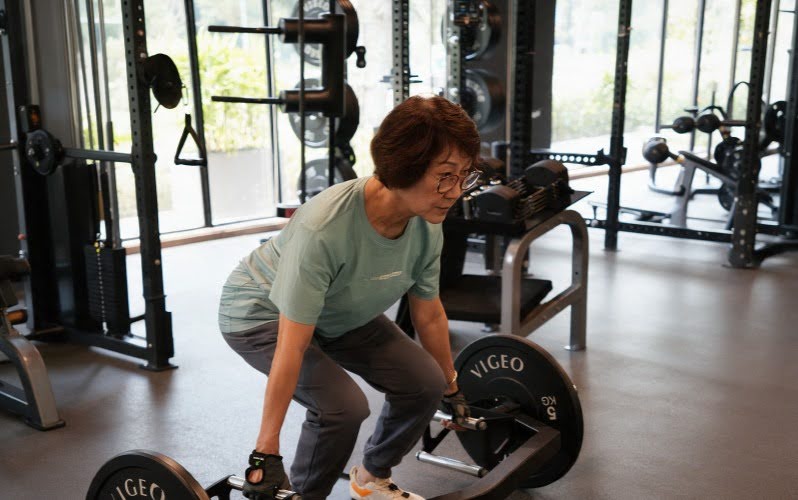
Appropriately designed resistance training can help older adults develop strength and power, although the results depend on the individual and how the training is structured and progressed. Simply performing exercises casually does not guarantee the same outcome.
A professional trainer may use resistance exercises to build strength in specific muscle groups while separately practising movement skills needed for everyday activities. Strength exercises don’t have to look exactly like the daily task to be useful.
Declining Balance and Stability
Balance can change with age as factors such as coordination, sensory information, muscle control, and proprioception change. Different balance exercises challenge different parts of this system, so they should not all be expected to produce the same result.
For example, a single-leg stand challenges the ability to maintain stability over a smaller base of support. Heel-to-toe walking places greater demands on balance while moving through a narrow base, while controlled weight shifts practise transferring body weight from one position to another.
These exercises can therefore serve different purposes within a program. The appropriate choice depends on what the student finds difficult and the level of support needed to perform the movement with control.
Strength, Balance, and Posture Work Together
Maintaining an upright position during walking, reaching, bending, and standing requires more than simply “having good posture”. Strength through the trunk, hips, and surrounding muscles contributes to the ability to control body position as movement changes.
Postural control may therefore be addressed through a combination of targeted strengthening, balance work, and movement practice. The selected exercise does not need to imitate an everyday task; building the underlying strength and then practising the required movement can both play a role.
When Feeling Stiff Does Not Automatically Mean Stretch More
Feeling stiff does not necessarily mean that flexibility is the only issue. The more useful questions are which movement feels restricted, how much range is currently available, and whether that range can be controlled.
Some students may benefit from stretching to improve flexibility. Others already have sufficient range but need more strength or support to use it effectively. Joint discomfort and other limitations may also influence how a movement feels.
These factors can overlap. Stretching, controlled movement, and progressive strength training may therefore be combined based on the individual, rather than treating flexibility as a standalone goal.
The aim is not simply to create a larger range of motion. It is to develop the movement range needed for daily activities together with enough strength and control to use it.
Building Strength and Practising Everyday Movement Are Both Useful
An exercise does not have to resemble an everyday task to provide value.
A targeted resistance exercise may develop strength in a particular muscle group, while another exercise or movement drill can help the student practise how that strength is used during standing, stepping, carrying, reaching, or changing direction.
Both approaches can serve a purpose within the same individual program. The important question is what physical quality or movement skill the exercise is intended to develop, rather than whether every exercise looks “functional”.
An exercise program for seniors can be structured around whether they need greater strength, need to practice a movement skill, or both.
How Exercise Can Be Adjusted to the Individual
Two students of the same age may need very different versions of the same exercise. You can adjust the challenge level through resistance, support, body position, range of motion, movement depth, and exercise choice.
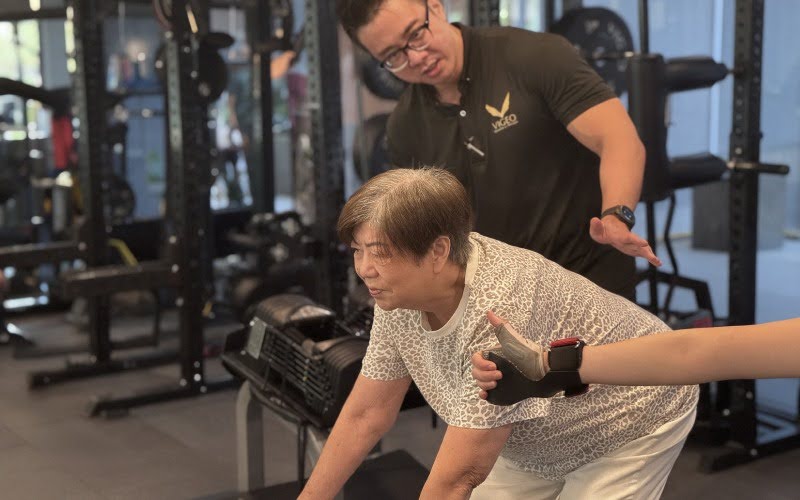
Working with a fitness trainer can help seniors match these variables to your current ability and the exercise’s purpose.
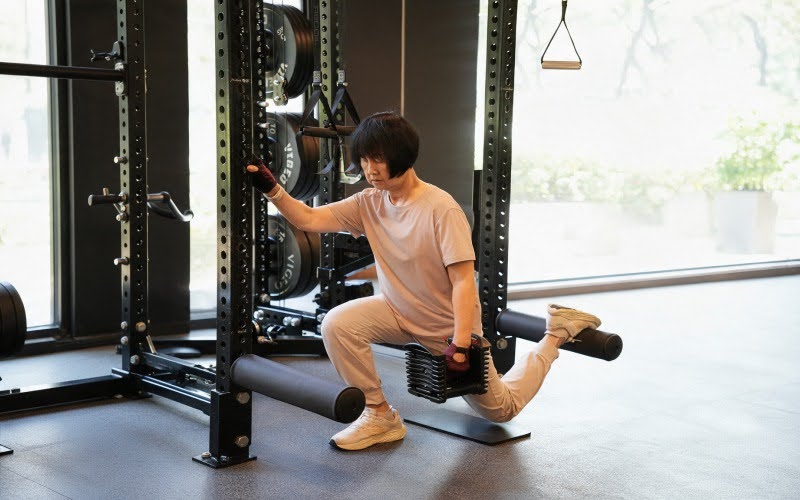
For example, if you feel unstable during a movement, a trainer may introduce support such as a rack. Your trainer can then adjust your position or body angle relative to the support to provide more or less assistance.
A suspension trainer may also help with a difficult part of an exercise, such as the bottom of a squat. How much assistance it provides depends on the setup and how you use the straps. This lets you adapt the movement to what you can manage while your coach watches how your control changes with support.
Progression does not always mean removing support before adding resistance. Before increasing the challenge, your coach may assess your stability, movement smoothness, and control through the intended range.
If you move with good control and no longer rely heavily on the support, you may keep light assistance while increasing resistance. In other situations, the next step may be to reduce assistance or gradually increase the movement range.
The aim is to give you an appropriate level of challenge based on what you can currently do, so strength, movement control, and confidence can develop progressively over time.
Building Strength, Mobility and Balance at the Right Level
Improving movement in later life requires enough challenge to create progress, but the appropriate challenge will not look the same for everyone.
One student may be ready for greater resistance, while another may need additional support, a different range of motion, or more time to develop control before progressing the exercise. Base these decisions on how the individual moves and what the exercise is intended to develop, not age alone.
At Vigeo, we begin by understanding the student’s current ability and the movements they want to improve. From there, we develop an individual program and progress it through appropriate changes to resistance, support, range of motion, and exercise selection.
Speak to a coach to arrange a consultation and assessment and discuss an appropriate starting point for your training.